
The One-Stop Go Pattern
In this we'll be looking at a particular price pattern that is repeated several times, so much that it is treated as price action. The One Stop Continuation pattern.
This wonderful pattern is simple to represent, and easy to identify, and take a trade, though they are a bit rare in occurence. To the keen observer, it is easy.
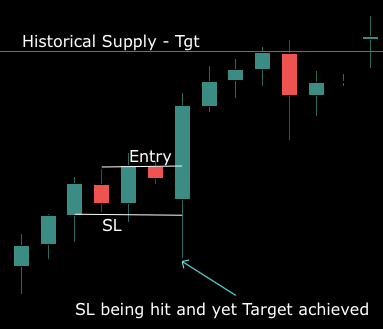
The one stop pattern requires a primary trend, and a candle opposite to the trend, that shall preferebly be a hammer(or a pinbar candle as it's also called). A trade is entered into, in the side of the primary trend, when the trend continues, past the closing price of the hammer. Note that the working of these varies, and the target price is based on a demand or a supply zone of the broader chart. (Either a primary or a second level target. TSL is recommended for extended time periods)
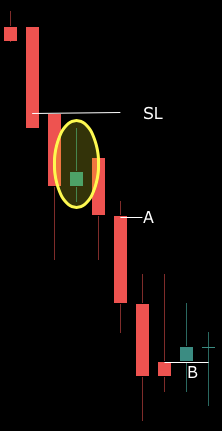
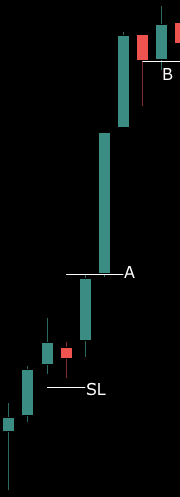
The sheer brilliance of using this to trade is the simplicity, and the minimal risk involved.
Typical cases of failure:
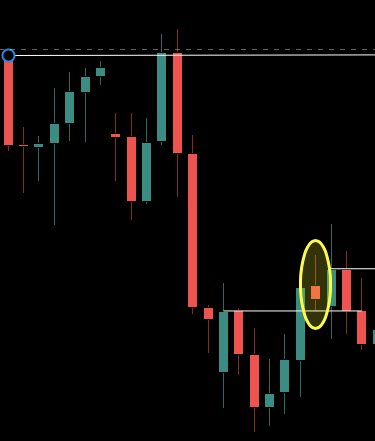
Though these work on all virtually all timeframes, when it comes to consistency and ease of identification, the smaller timeframes of 1/3/5/15 min take the lead.
This leads to these rules that can be framed albeit loosely:
- Smaller Timeframes
- Entry near the start/ at mid-point of the primary trend, not near the close/target.
- Entry only after the close has been breached on a closing basis by the suceeding candle.
- Appropriate holding periods, consistent with the timeframes.